
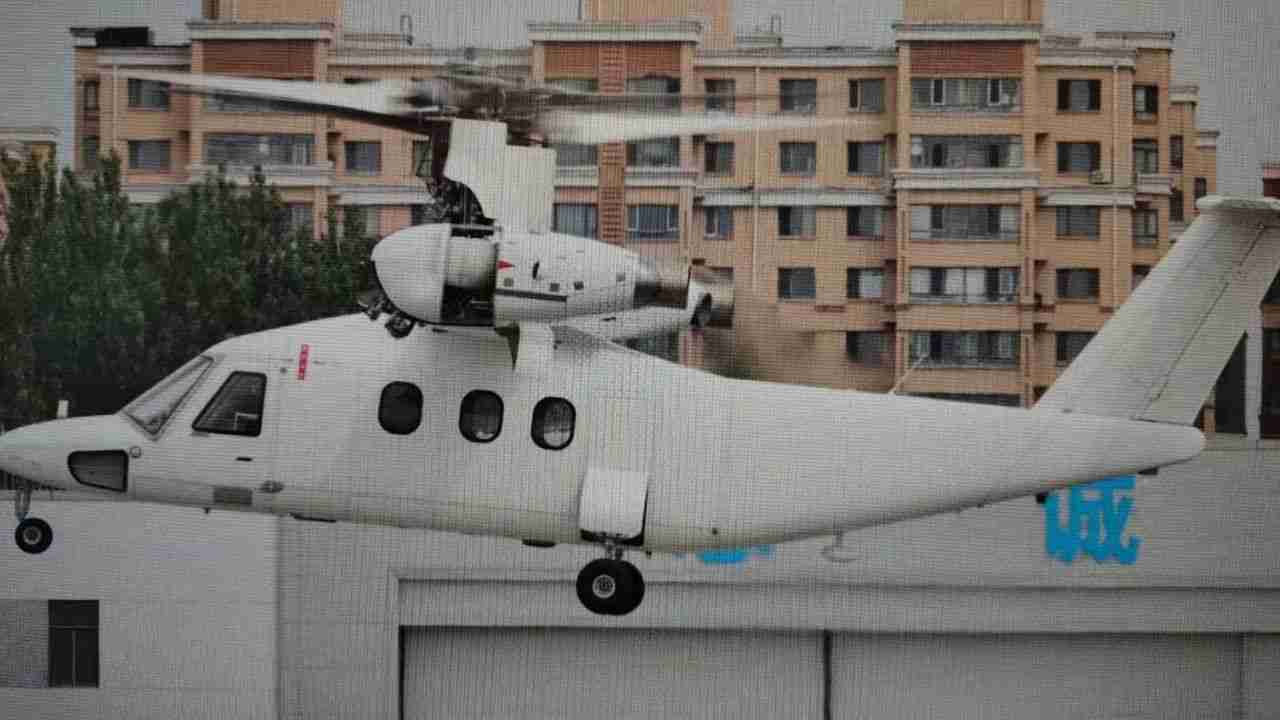
China conducted the first flight tests of its first crewed tiltrotor aircraft, a significant milestone in its aviation sector. Although details about the manufacturer and project designation remain secret, images circulating on social media show a prototype inside a hangar.
The design, which closely resembles the Italian Leonardo AW609, uses cutting-edge technology similar to the American V-280 Valor, where only the rotors and parts of the nacelles rotate—a solution aimed at greater reliability compared to older models.
Although previous projects in China focused on civilian applications, the military implications of this new tiltrotor are evident. An aircraft capable of taking off and landing like a helicopter but flying fast and with long range like an airplane is ideal for the Indo-Pacific operational theater. It could be crucial for resupplying forward posts on remote islands, conducting search and rescue (CSAR) missions, special operations, and supporting amphibious forces, operating from frigates or rudimentary airstrips—key areas for Beijing’s influence-expansion strategy.
However, the path to operational readiness is complex and costly, as shown by the long and problematic developments of the V-22 Osprey and the AW609 itself. Although smaller and potentially cheaper than the Osprey, the Chinese tiltrotor will face the same technical complexity challenges.
If successful, it will not replace China’s large transport helicopters but could complement the fleet by performing specific missions currently carried out by helicopters like the Z-9 and Z-20, while also providing valuable experience for the development of larger future models.
Source: The War Zone | Photo: X @RickJoe\_PLA | This content was created with the help of AI and reviewed by the editorial team
??? Sure, why not at this point. Via Captain小潇 pic.twitter.com/t9KX7WBUim
— Rick Joe (@RickJoe_PLA) August 18, 2025
